Handpainted Kerala Saree: A Guide to Art, Styling and Care
Discover handpainted Kerala saree designs, from Pichwai to floral and mural art, with styling ideas, buying tips and guidance on caring for your saree.
- Author
- Published at
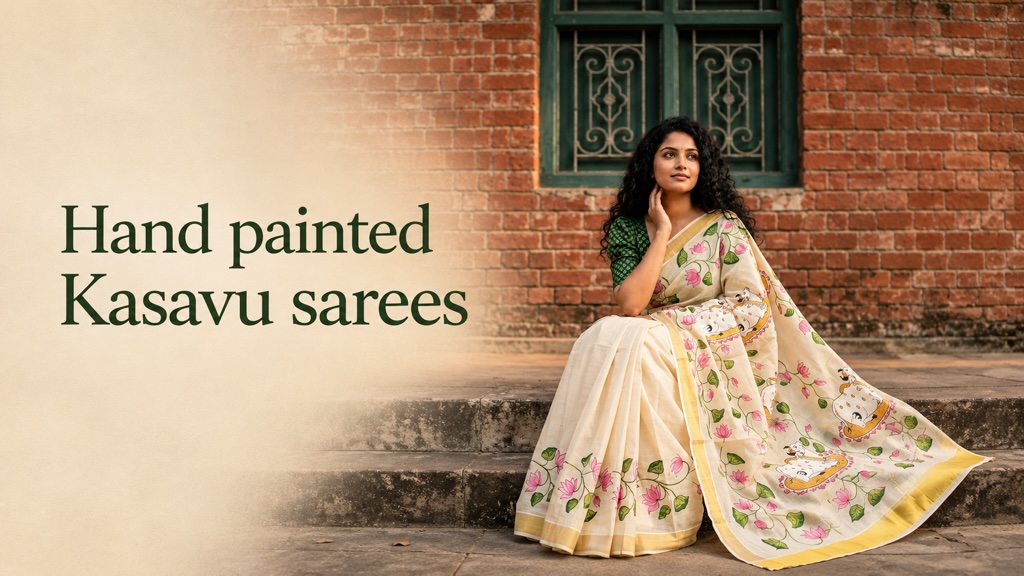
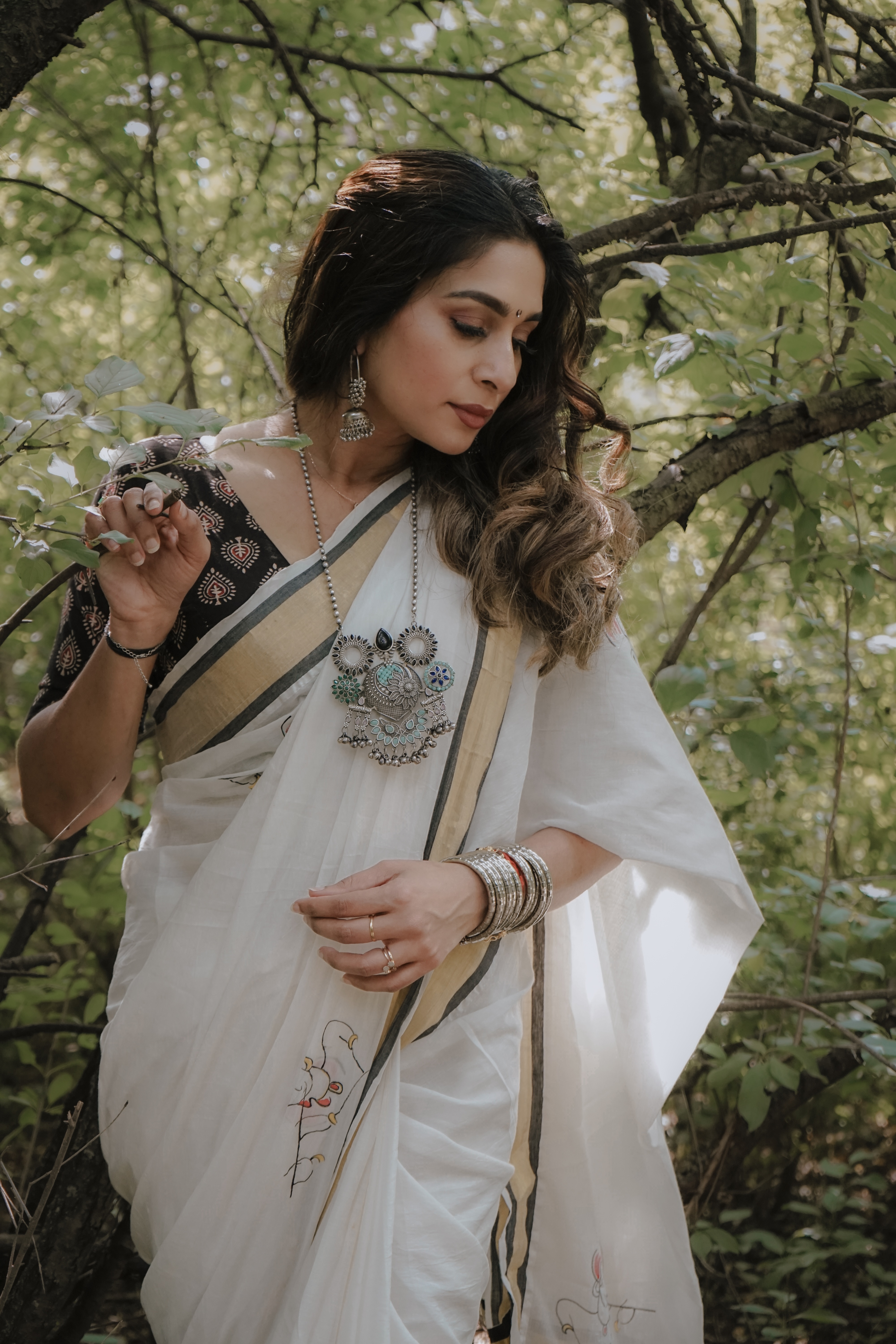
An off-white drape, a shimmering kasavu border and motifs brought to life by an artisan’s brush—a handpainted Kerala saree brings together textile tradition and individual artistic expression.
At Ekatva, our collection explores this meeting of crafts through Pichwai-inspired motifs, Madhubani patterns, Bengal Pattachitra, delicate florals, geometric mandalas and Kerala mural-inspired paintings. Each style offers a different way to wear art, whether you prefer a quietly detailed saree or a drape with a striking narrative.
Here is a closer look at these hand painted Kasavu saree designs, along with ideas for choosing, styling and caring for your own.
What Is a Handpainted Kerala Saree?
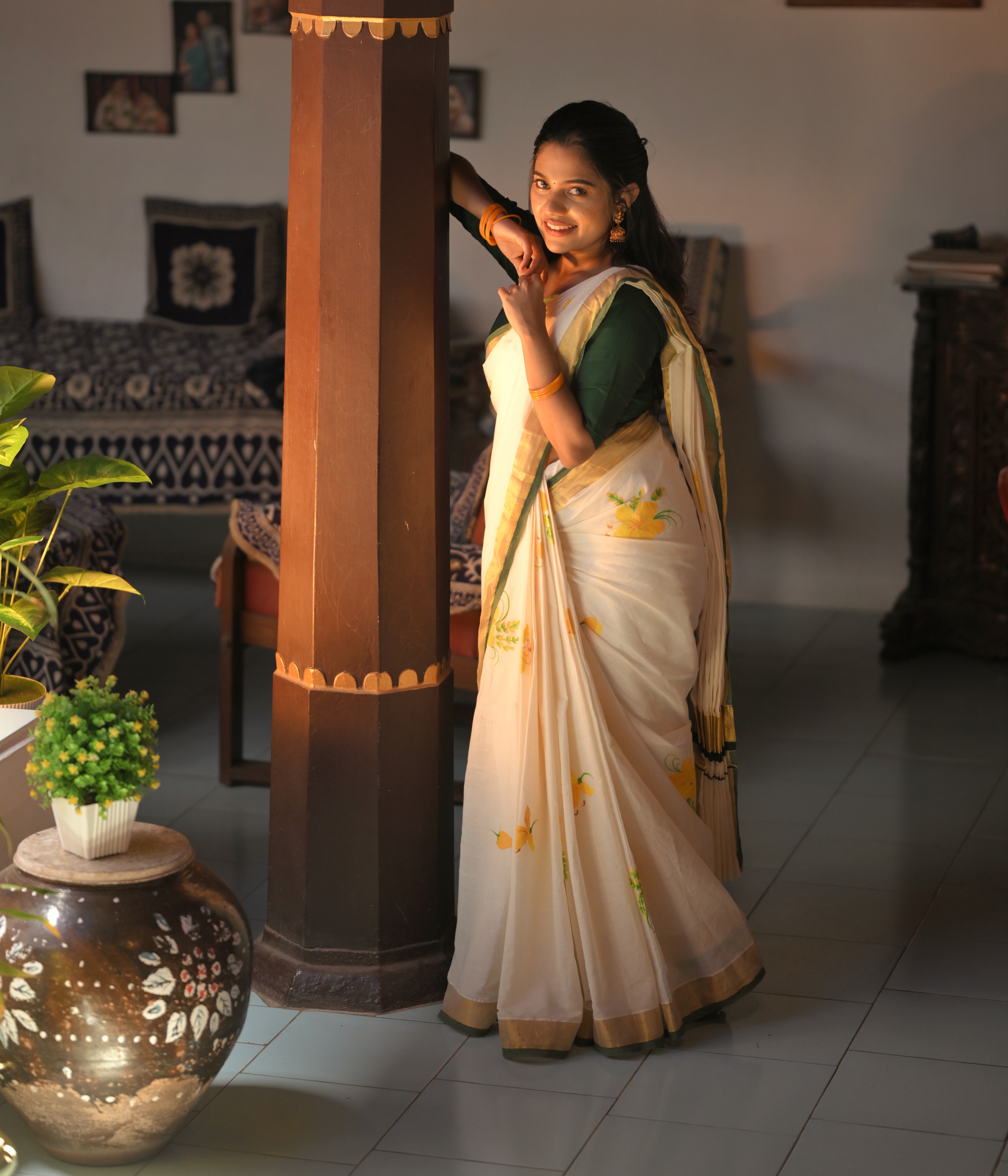
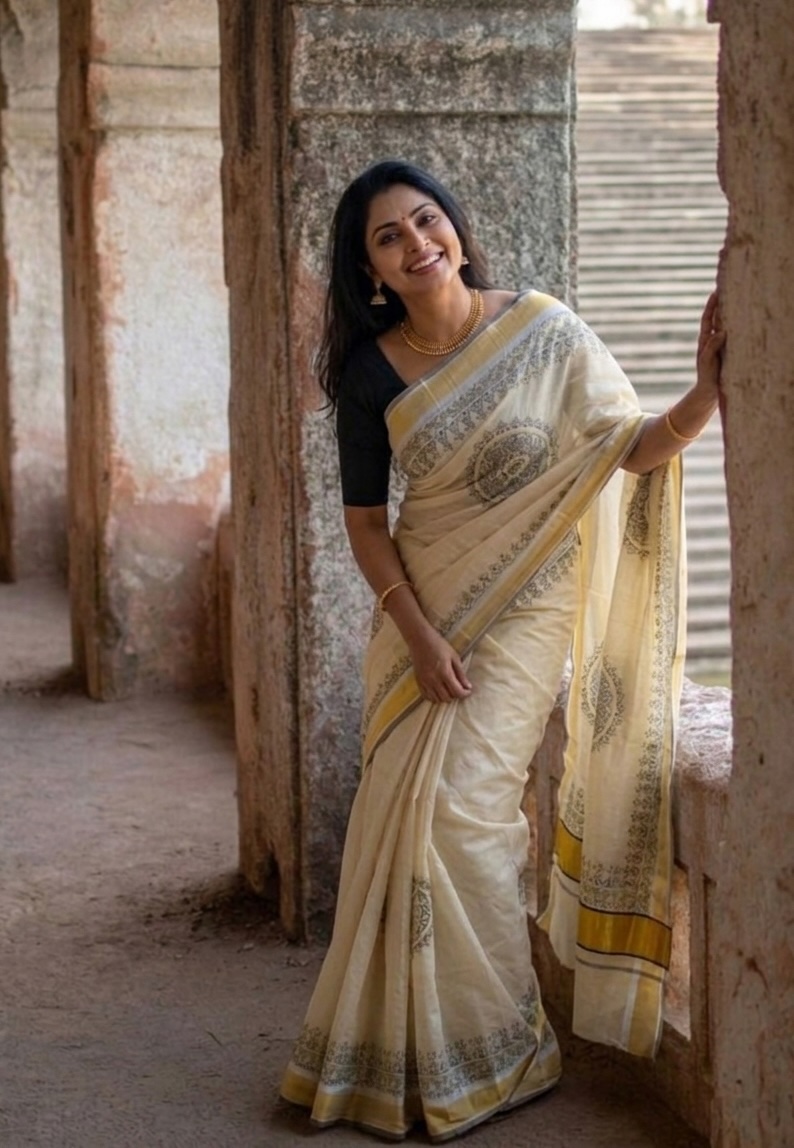
A handpainted Kerala saree features artwork applied by hand to the fabric. In this collection, the characteristic off-white Kasavu drape becomes a canvas for painted borders, scattered motifs and detailed pallu compositions.
The finished look depends on both the saree and the painting: the placement of a flower, the scale of a geometric pattern or the detail in a figurative scene can change how the entire drape feels.
Hand painting and hand weaving describe different processes. When choosing a saree, check the fabric composition and weaving details separately from the technique used to decorate it.
Handpainted Kerala Saree Designs to Explore
Pichwai Hand Painted Kasavu Sarees
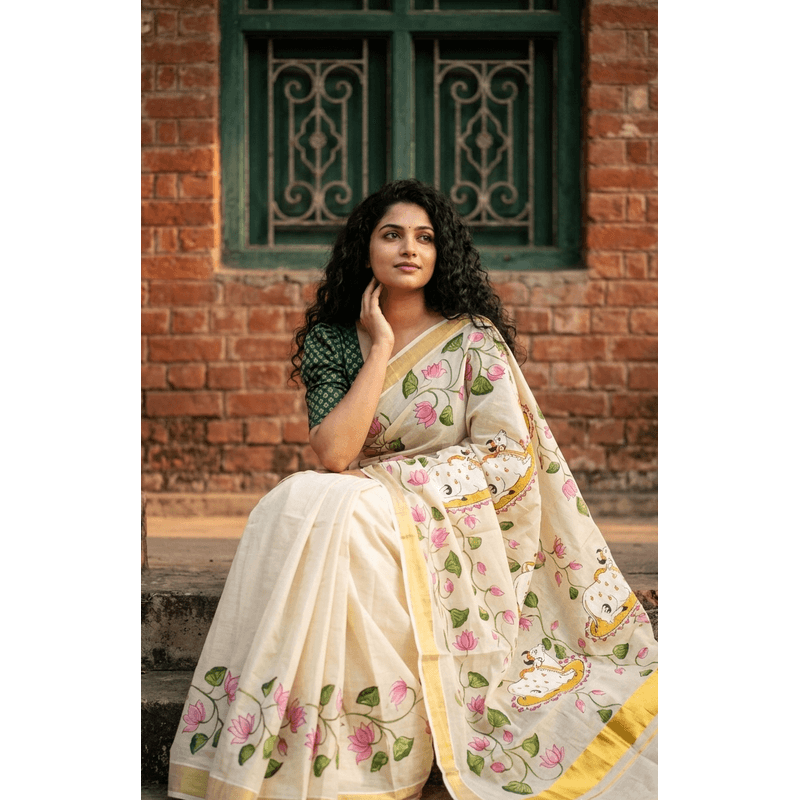 Our Pichwai-inspired Kasavu sarees draw on the devotional painting tradition associated with Shrinathji in Nathdwara, Rajasthan.
Cow and lotus motifs bring this visual language to the off-white drape. The cows recall Krishna’s pastoral associations, while lotus flowers introduce soft shapes and colour against the kasavu border.
Choose this style if you enjoy recognisable motifs and devotional imagery. A blouse in a colour drawn from the painting can bring the composition together without distracting from the artwork.
Madhubani Hand Painted Kasavu Sarees
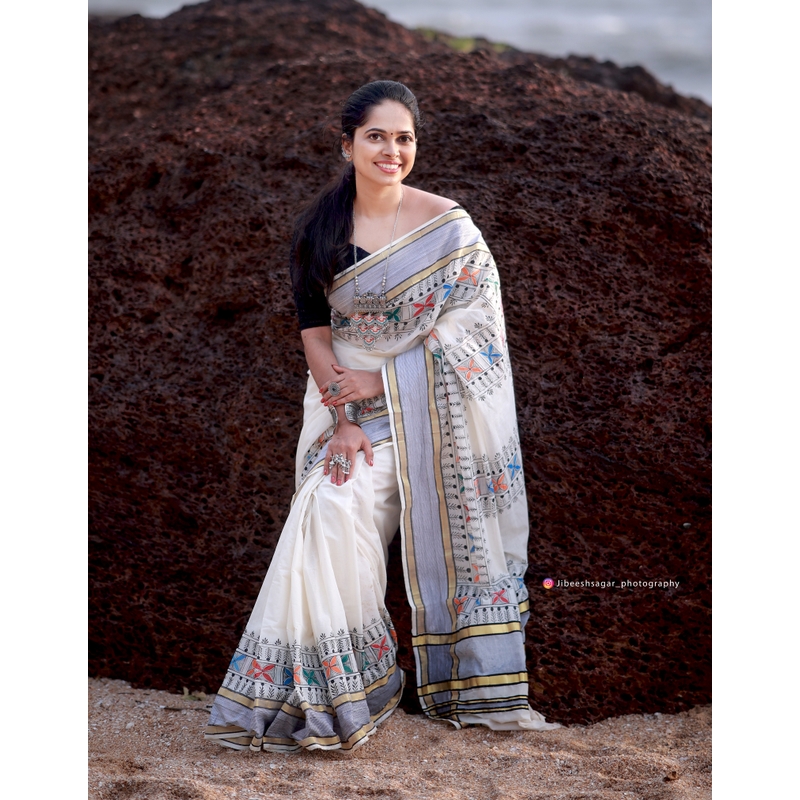
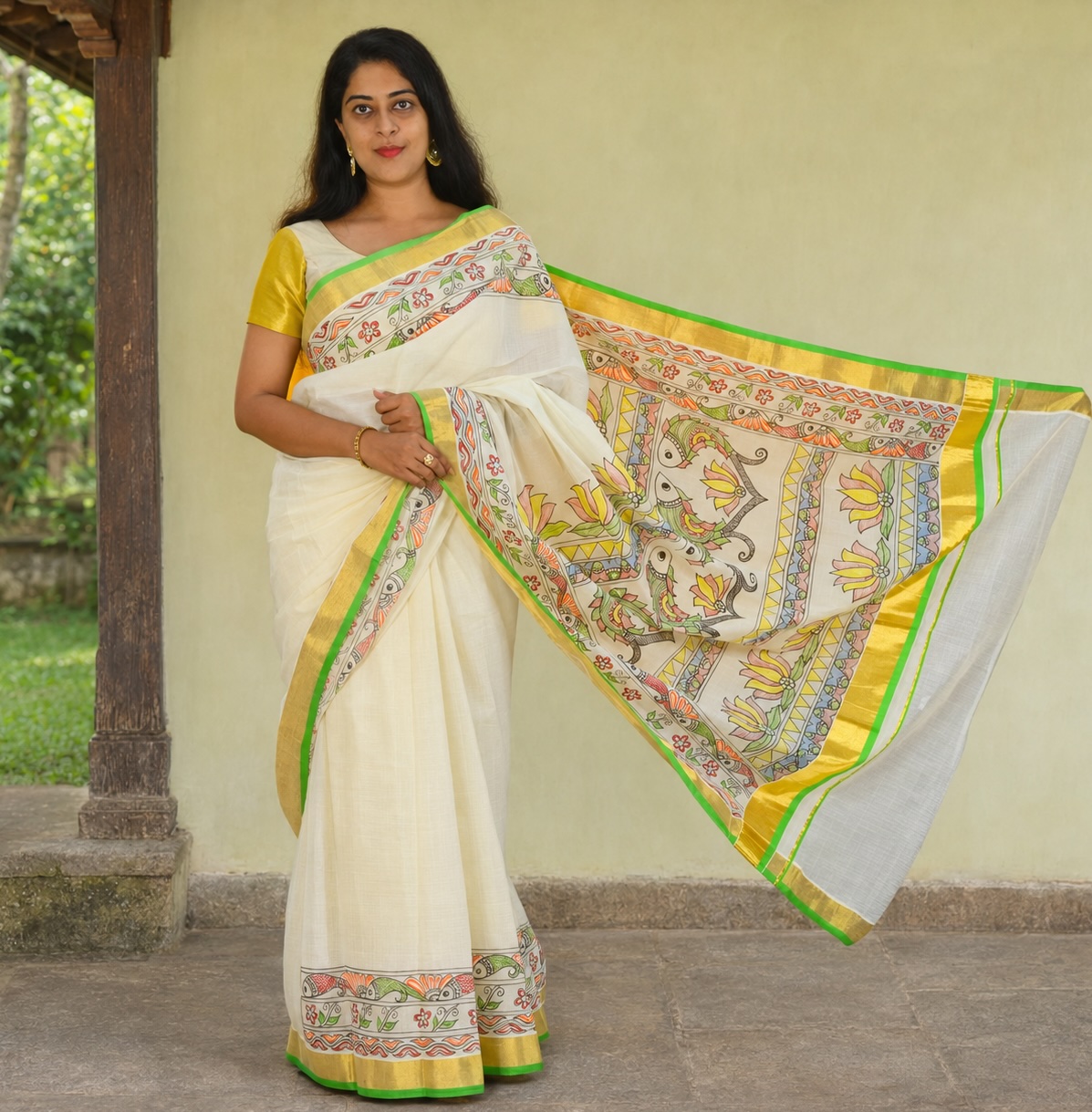
Fine lines, patterned borders and nature-inspired imagery give our Madhubani hand painted Kasavu sarees their distinctive character.
Drawing inspiration from the Mithila painting tradition, including Kohbar imagery, these designs combine floral and geometric elements with narrative compositions. The detailed painting creates a contrast with the open space of the off-white fabric and the sheen of the kasavu pallu.
For styling, choose a plain blouse that allows the linework to remain visible. Pick one colour from the painted motifs for a coordinated look.
Pattachitra Hand Painted Kasavu Sarees
Ekatva’s Durga Pattachitra sarees bring together Kerala’s Kasavu textile tradition and the narrative painting of Bengal’s Patua artists.
A detailed portrayal of Durga forms the focus of the pallu, framed by decorative elements inspired by the chaalchitra. A single-colour painted border recalls the visual rhythm of a Bengali laal paar, while the kasavu adds its own shimmer.
This design suits someone looking for a saree with a prominent figurative composition. When draping it, arrange the pallu so the central artwork can be seen clearly.
Kerala Kasavu Sarees with Hand Painted Floral Motifs
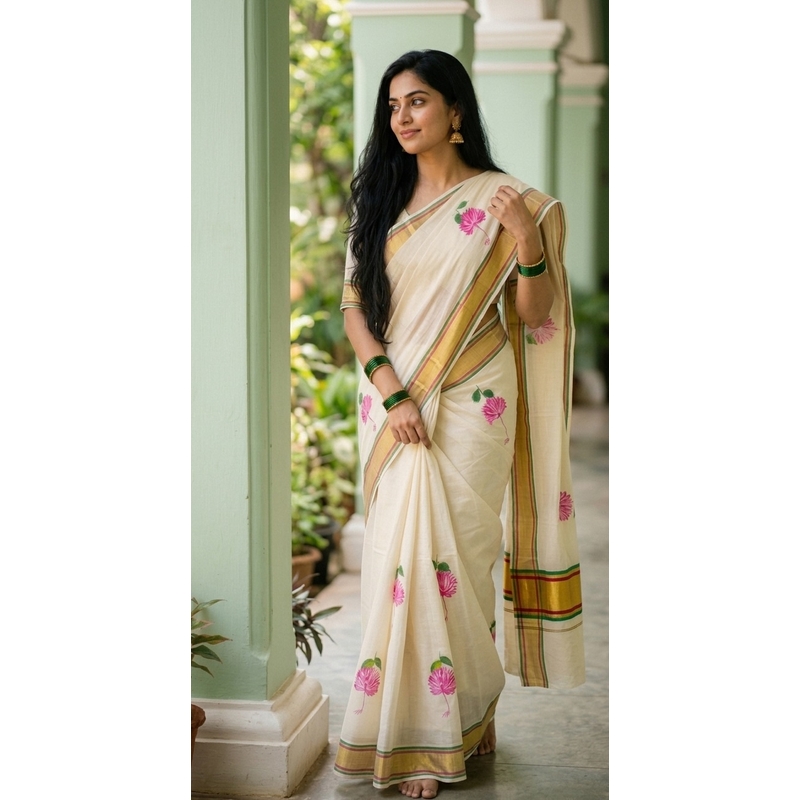
For those who prefer lighter compositions, floral hand painted Kerala sarees offer colour and detail with room for the fabric itself to shine.
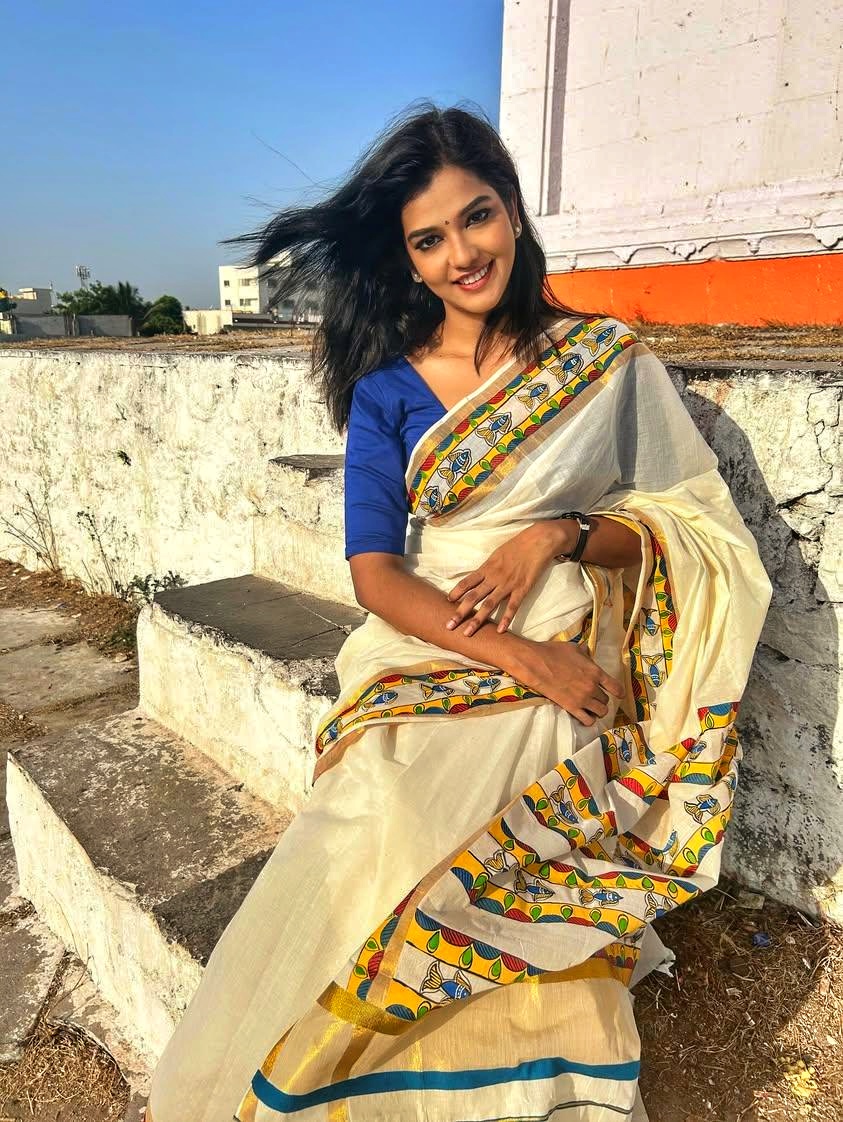
Our floral designs include chembarathi, thamara, shankupushpam and kanikonna—blooms that offer different shapes and colour combinations for the artisan to explore.
Look closely at the placement of the flowers. Scattered motifs create a different effect from a densely painted border or a large floral pallu. Choose the balance that feels most comfortable for your occasion and personal style.
A blouse matching one flower colour is an easy starting point. For a softer combination, consider an ivory blouse with subtle texture.
Mandala Hand Painted Kerala Kasavu Sarees
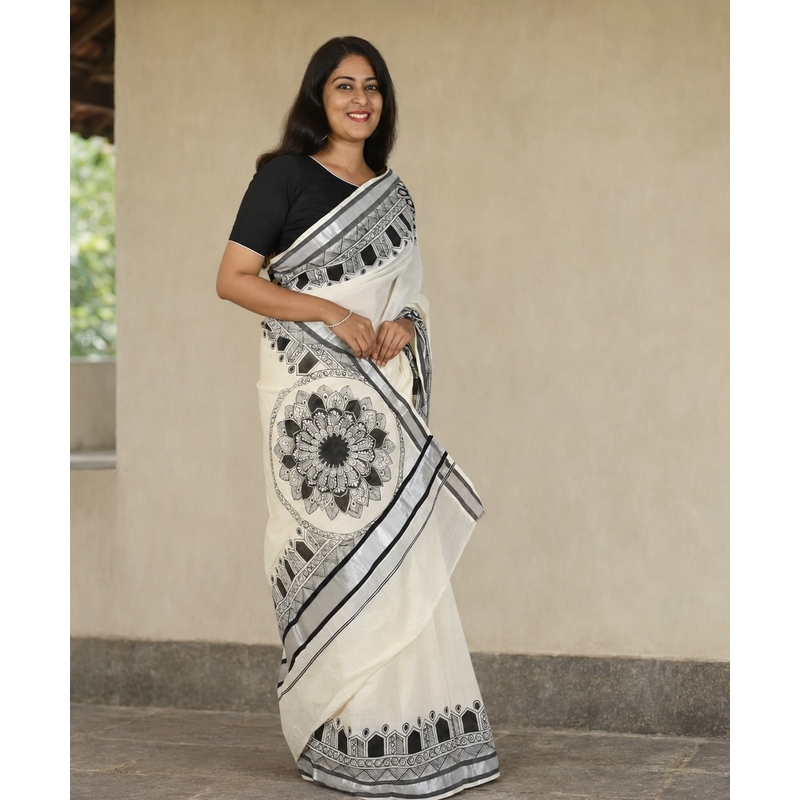
Mandala designs bring geometric detail to the traditional drape.
Our monochrome interpretation pairs black painted patterns with an off-white body and silver-toned zari. Repeated shapes and floral elements create an interplay between precise geometry and flowing forms along the border and pallu.
A black blouse echoes the artwork, while silver-toned jewellery complements the border. Keep other accessories simple if you want the painted pattern to be the focus.
Kerala Mural-Inspired Hand Painted Sarees
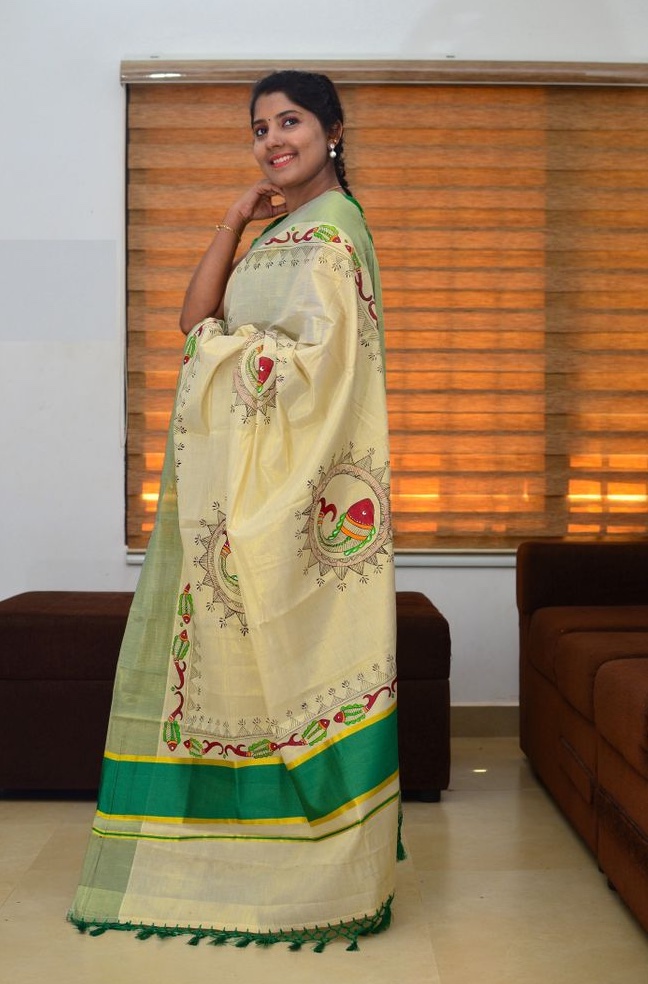
Kerala mural-inspired sarees feature expressive figures, decorative borders and rich colour combinations.
In our collection, compositions featuring divine imagery and Theyyam-inspired figures bring a strong narrative presence to the drape. Floral and geometric details frame the central artwork.
If you prefer a statement saree, look for a composition with a detailed pallu. Pair it with a plain blouse in a colour taken from the painting, and consider how the artwork will sit when the saree is pleated and worn.
How to Style a Handpainted Kerala Saree
Start with the painting. Its colours, scale and placement can guide your blouse, jewellery and drape.
For a detailed Pattachitra or mural-inspired saree, a plain blouse gives the artwork space. With a delicate floral design, a blouse that picks up one painted colour can create a gentle connection between the pieces.
Match jewellery to the overall composition. Gold-toned pieces can complement a golden kasavu border, while silver-toned accessories work well with our monochrome mandala design.
Pay particular attention to the pallu. If it carries the main composition, an open drape may show more of the painting. Try the arrangement before the occasion to see which details remain visible.
Choosing a Handpainted Kerala Saree for Onam
A hand painted Kerala saree for Onam can combine the familiar off-white-and-kasavu palette with artwork that reflects your own taste.
For a daytime gathering, you might prefer scattered floral motifs or a lightly painted border. For a more elaborate celebration, a narrative pallu or detailed mural-inspired composition can become the centre of your outfit.
Consider comfort alongside appearance. Check the fabric, weight and ease of draping, particularly if you will wear the saree for several hours. Plan your blouse and drape around the painted details you most want to show.
What to Check Before Buying
Photographs are a useful starting point, but the product details should help you understand what you will receive.
Before choosing a hand painted Kasavu saree, check:
- Fabric composition: Confirm the material and any available weaving information.
- Artwork placement: Look for full-length photographs and close-ups of the border, body and pallu.
- Saree dimensions: Check the length, width and whether a blouse piece is included.
- Painting details: Ask about the technique and any natural variations between pieces.
- Price: Compare the fabric, amount of painted detail and complexity of the composition.
- Customisation: If you want a different colour or motif, confirm whether it is offered.
- Delivery and returns: Check timelines and policies before ordering for an occasion.
- Care instructions: Make sure you understand the requirements for the finished saree.
How to Care for a Handpainted Kerala Saree
Care should suit the fabric, border and painted surface together. Follow the instructions supplied with your specific saree rather than assuming that general cotton or silk care advice will apply.
Before washing, ironing or treating a stain, check with the seller if the instructions are unclear. Ask whether professional cleaning is required and how the painted areas should be handled.
Keep the care information with your saree so it is available whenever you need it.
Frequently Asked Questions
What is the difference between a handpainted and a printed Kerala saree?
Hand painting involves applying the artwork by hand to the fabric. Printing uses a printing process to transfer or reproduce a design. Ask for technique details and close-up photographs if you want to understand how a particular saree was made.
Which blouse works with a handpainted Kerala saree?
A plain blouse in a colour taken from the artwork is a versatile choice. Consider the border colour and the amount of painted detail when deciding on fabric, texture and embellishment.
Can I customise a hand painted Kasavu saree?
Customisation depends on the design and please reach out to us through Whatsapp for more assistance.
Can I wash a handpainted Kerala saree at home?
Check the care instructions for your specific saree first. The fabric, paint and border may have different care requirements, so confirm the recommended cleaning method with the seller.
Can I order in bulk?
At Ekatva we do take bulk orders and please reach out to us through Whatsapp to order.
Find the Artwork You Want to Wear
From delicate flowers to detailed narrative paintings, Ekatva’s handpainted Kerala saree collection offers different expressions of Indian art on the Kasavu drape.
Explore the collection to find the motifs, colours and compositions that speak to you—and a saree you can enjoy wearing for occasions to come.