Noolukettu Ceremony & 28th Day Dress Ideas for Baby Girls and Boys
Learn about Kerala's Noolukettu ceremony and shop traditional 28th day ceremony dresses for baby girls and boys, including kasavu sets and matching family looks.

- Author
- Published at
Planning a Noolukettu ceremony or Kerala 28th day ceremony? Discover a traditional Noolukettu dress for a baby girl or a comfortable Noolukettu dress for a baby boy, including kasavu frocks, pattu pavada styles, kurta-dhoti sets, and personalised naming-ceremony outfits. Shop by baby first, then use this guide to understand the celebration, prepare the essentials, and coordinate a memorable family look.
Shop Noolukettu Dresses for Newborns
Shop Noolukettu Dresses for Baby Girls


Shop Noolukettu Dresses for Baby Boys
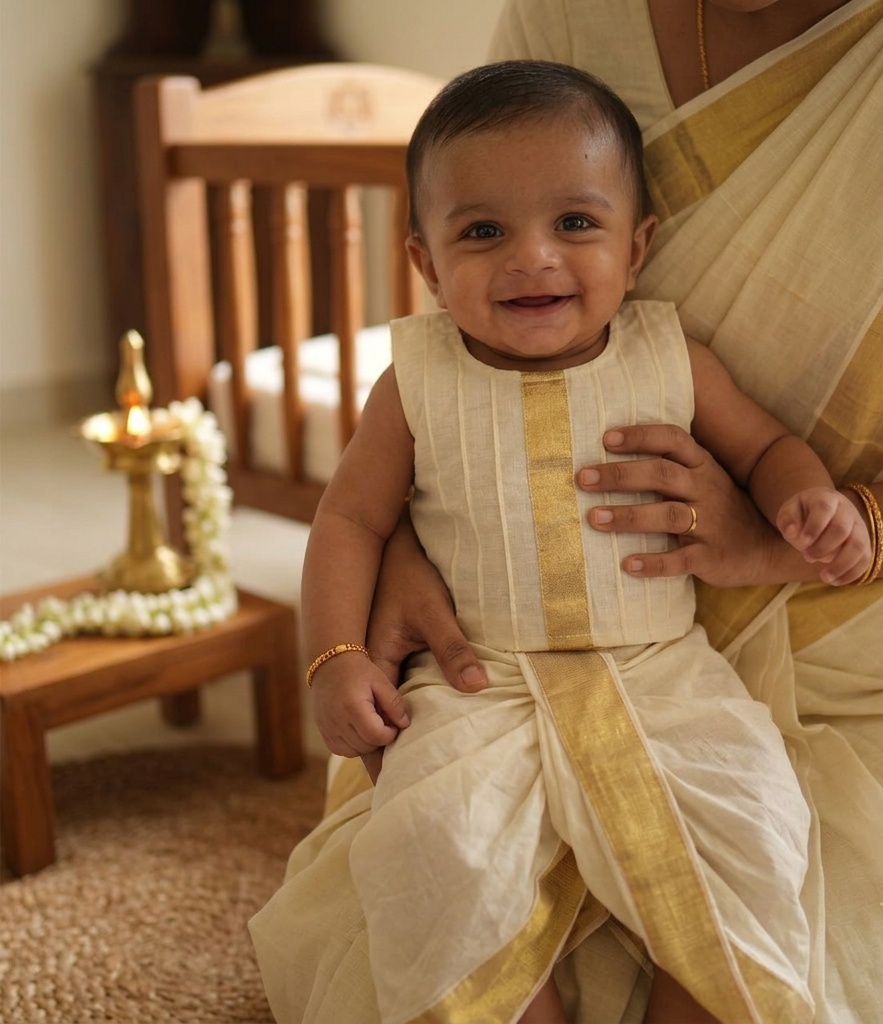


What Is a Noolukettu Ceremony?
Noolukettu is a traditional Kerala celebration that welcomes a newborn into the family. In English, it is often described as a baby naming and thread-tying ceremony. Many families observe it on or around the 28th day after birth, which is why it is also called the 28th day ceremony or 28 kettu.
You may see the name written as Noolukettu, Noolkettu, Noolu kettu, or in Malayalam as നൂലുകെട്ട്. The spelling varies, but the shared idea is a loving family occasion centred on the baby's name, blessings, and first traditional outfit.
What Happens During Kerala's 28th Day Ceremony?
The details differ by family, faith, and community. A celebration may include prayers, lighting a traditional lamp, announcing or whispering the chosen name, tying a ceremonial thread or aranjanam, receiving blessings from elders, and taking family photographs. Some families keep the gathering intimate, while others invite relatives and friends for a larger naming ceremony.
Treat these customs as a starting point rather than a fixed procedure. Parents can speak with elders, a family priest, or their place of worship about the traditions they wish to follow.
What Items Are Commonly Prepared for Noolukettu?
Every household prepares differently, so confirm the ceremonial items with your family. A practical Noolukettu checklist may include:
- The baby's Noolukettu dress and a comfortable spare outfit.
- The chosen name and any naming details required for the ceremony.
- A ceremonial thread, chain, or aranjanam if it forms part of your tradition.
- A lamp, flowers, prayer materials, or other items recommended by family elders.
- Diapers, a soft wrap, feeding essentials, and everything needed to keep the baby settled.
- Coordinated outfits for parents or siblings if you are planning family photographs.
Prepare the baby's outfit in advance and keep the dressing process short and gentle. A 28-day-old baby may need frequent changes, feeds, and quiet breaks during the function.
How to Choose a Comfortable Noolukettu Dress
Comfort comes before decoration for a newborn naming ceremony dress. Look for a soft lining, smooth seams, an easy opening, and enough room around the waist for a diaper. Cotton and cotton-lined kasavu styles are practical for Kerala's climate, while light festive details can make the outfit feel special without adding unnecessary weight.
Check the product's size chart rather than relying only on age. If the outfit is personalised or made to order, confirm the baby's measurements and expected dispatch date before ordering. Keeping a soft cotton change of clothes nearby is useful during a longer celebration.
Noolukettu Dress Ideas for Baby Girls
A kasavu frock is a classic Noolukettu set for a baby girl. Gold borders, subtle embroidery, gentle floral details, and personalised name work can add a ceremonial finish while keeping the silhouette easy to wear. An infant pattu pavada or a cotton-lined naming-ceremony dress can also work for families who prefer a more traditional layered look.
Choose accessories carefully and keep them light. A soft headband or a small fabric detail is often enough for photographs; comfort and unrestricted movement should remain the priority. Browse the complete Noolukettu dress collection for baby girls for more styles.
Noolukettu Dress Ideas for Baby Boys
Popular Noolukettu sets for baby boys include a soft kasavu shirt and mundu, a kurta with a pre-stitched dhoti, or an easy front-opening ethnic set. These outfits give the traditional cream-and-gold look while making diaper changes and dressing more manageable.
For the 28th day ceremony, look for a relaxed neckline, soft cotton lining, and an elasticated or adjustable waist. Explore the full Noolukettu dress collection for baby boys to compare kurta, mundu, and panchakacham styles.
Matching Noolukettu Outfits for Parents and Family
Family outfits do not have to be identical. A shared kasavu border, an ivory-and-gold palette, or one repeated accent colour can connect the baby's outfit with the mother's saree or set mundu, the father's kurta or mundu, and a sibling's traditional dress.
Choose the baby's outfit first, then build the parents' clothing around its fabric and border. This keeps the newborn at the centre of the celebration and makes coordinated photographs feel natural.
Complete Your Noolukettu Family Look
Noolukettu Dress Ideas from Ekatva Families
Real family celebrations show how easily kasavu fabrics, woven borders, and shared colours can bring different generations together.

This family coordinated the baby's infant ethnic set with a set mundu, embellished blouse, and men's kurta for a polished 28th day ceremony look.

A silver kasavu baby set pairs naturally with a matching blouse and kasavu saree while allowing each family member to wear an age-appropriate style.

A puff-sleeved baby frock and a mother's blouse made from the same kasavu-striped fabric create a clear mother-and-daughter match.

A mural-print kasavu dress gives the traditional palette a colourful, contemporary touch while a simple kasavu jabla keeps the baby's outfit comfortable.
Noolukettu Ceremony and Dress FAQs
What is a Noolukettu ceremony?
Noolukettu is a Kerala tradition that welcomes a newborn through naming, blessings, and the tying of a ceremonial thread or ornament in families that follow the custom. Practices vary across communities.
Why is Noolukettu called the 28th day ceremony?
Many Kerala families hold the function on or around the baby's 28th day, leading to the names 28th day ceremony and 28 kettu. The exact day and customs may differ, so families should follow their own tradition and the baby's needs.
What is Noolukettu called in English?
Noolukettu is commonly described in English as Kerala's baby naming or thread-tying ceremony. The Malayalam word is written as നൂലുകെട്ട്.
What items are needed for a Noolukettu ceremony?
Common preparations include the baby's traditional dress, a spare outfit, naming details, a ceremonial thread or ornament where customary, prayer materials chosen by the family, and everyday newborn essentials. Confirm ritual items with your elders or religious guide.
What should a baby girl wear for Noolukettu?
A soft kasavu frock, cotton-lined naming-ceremony dress, or infant pattu pavada makes a traditional baby-girl outfit. Choose a design with gentle seams, an easy opening, and room for a diaper.
What should a baby boy wear for Noolukettu?
A kasavu shirt-and-mundu set, kurta-dhoti set, or front-opening infant ethnic outfit works well. Lightweight fabric and an adjustable or elasticated waist help keep a newborn comfortable.
Which fabric is best for a 28th day ceremony dress?
Soft cotton or a festive fabric fully lined with cotton is a practical choice for sensitive newborn skin. Check the product details, seams, closures, and size chart before ordering.
Can parents wear matching Noolukettu outfits?
Yes. Parents can coordinate with the baby's kasavu border, base colour, or accent shade without wearing identical outfits. Start with the baby's dress, then choose a related saree, set mundu, kurta, or dhoti for the adults.
Celebrate your baby's first milestone with an outfit that feels traditional, gentle, and personal. Explore Ekatva's complete Noolukettu collection to find newborn and matching family styles.